Educational Games by National Geographic
Krill Smackdown
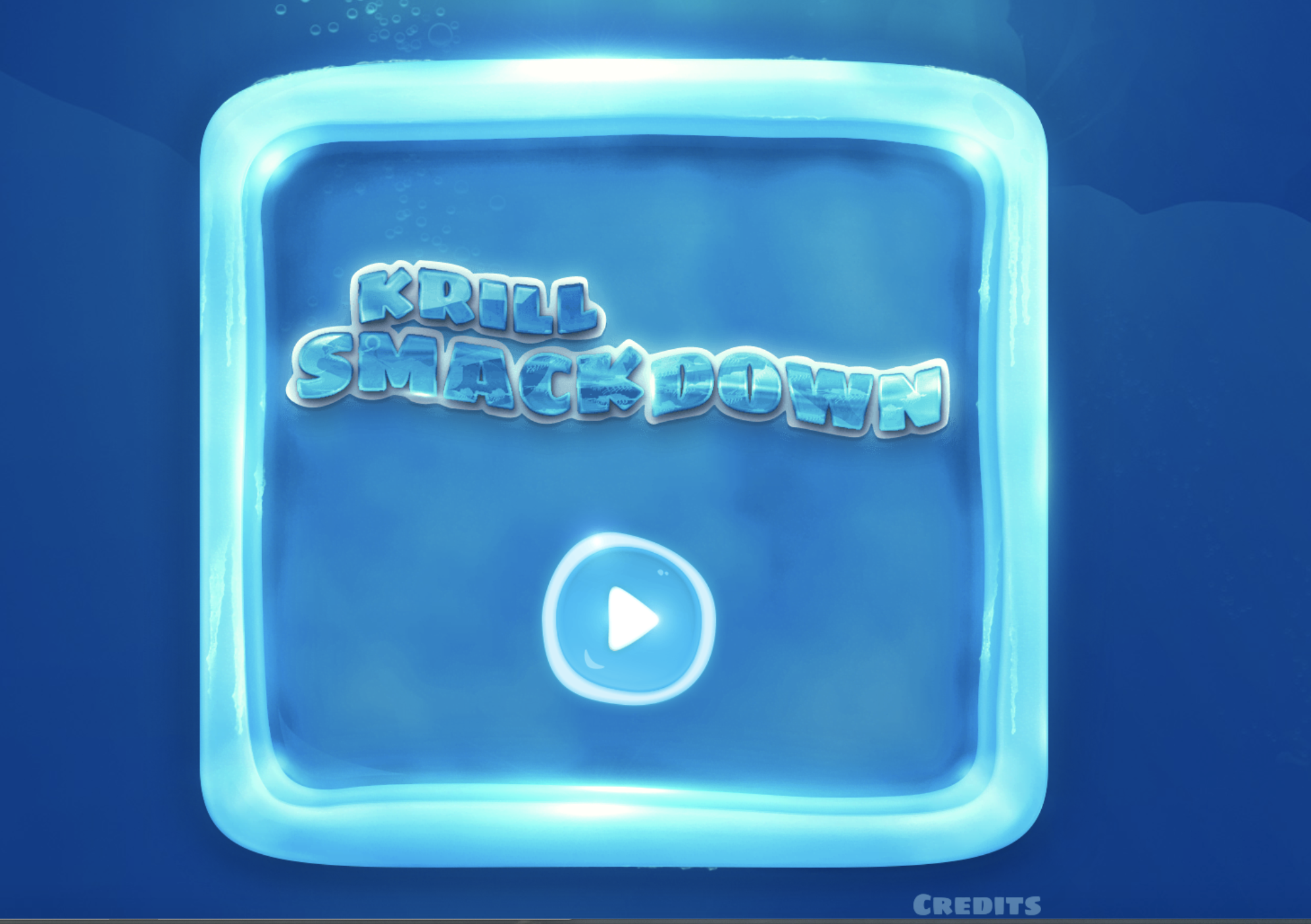
- What’s the game goal? Is it clear? Is it compelling to me? Why or why not?
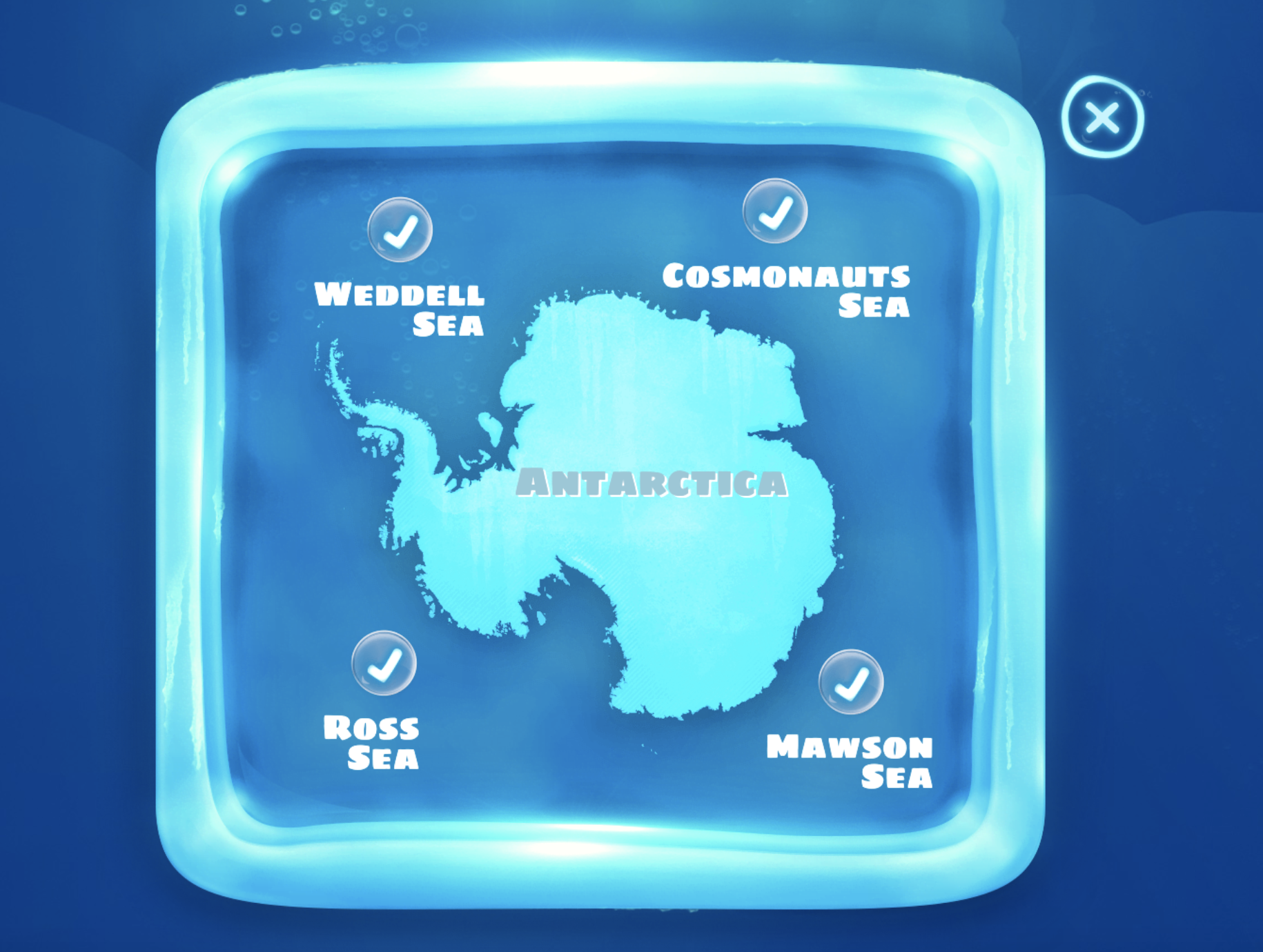
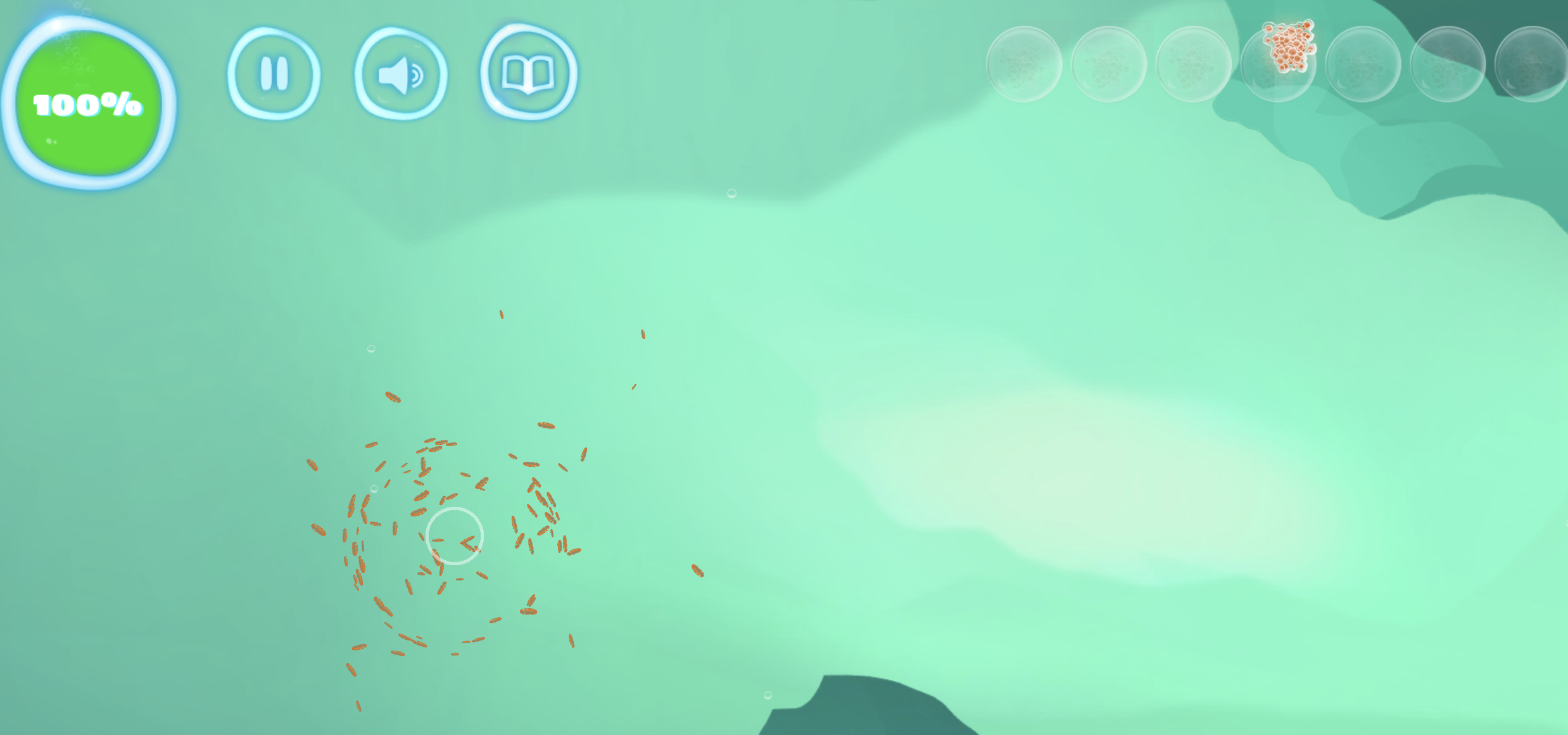
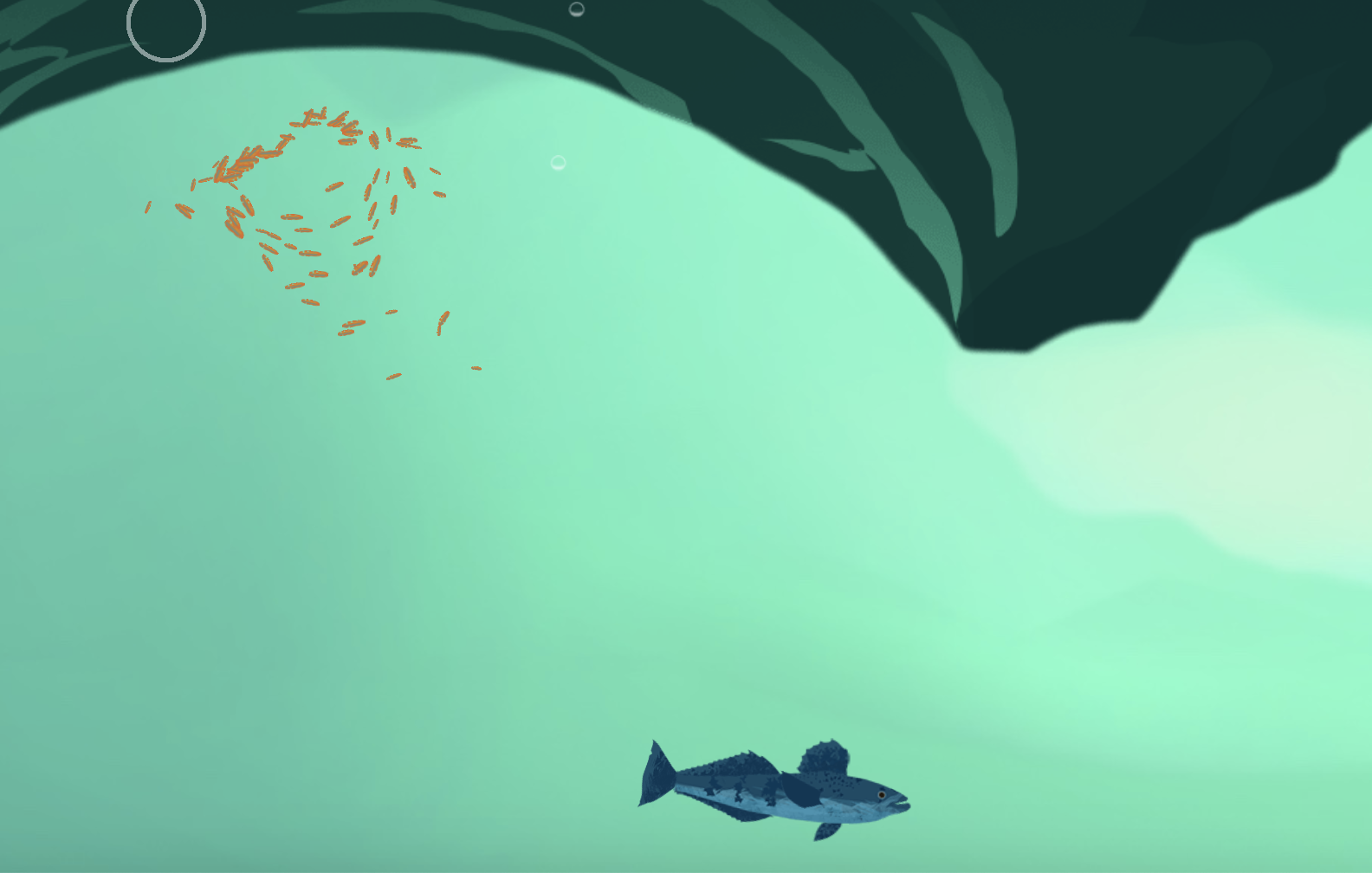
The game I chose for this third journal entry was Krill Smackdown. The goal of the game is to move krill “around the waters off Antarctica” while avoiding predators and collecting all the eggs to expand the group and move to the next level. I was very entertained while playing the game, so for me it was fun to play. However, it is clearly designed for kids, maybe around the age of 6-12.
- What’s the game’s core dynamic? Is it exploration, collection, “race to the finish,” solve—or a blend of two different dynamics such as collection AND race to the finish?
The dynamics include to collect the eggs and avoid the predators.
- Are the rules clear? How do I learn them?
The rules are clear. Before starting the game, they are presented to the player as instructions. The instructions also explain the relationship of the krill to how the ocean ecosystem works in regards to the food chain, which I thought was pretty cool.
- What game mechanics (aka rules) make the game most fun? Which one(s) would I change? What would happen if I did?
The double clicking to make the krill’s swim faster makes the game fun. I wouldn’t change the rules.
- Do the aesthetics of the game draw me in? What emotional reaction do the aesthetics elicit in me?
This game reminded of me games I would play when I was in middle school. The functions, were to use the mouse to move the swarm, speeding up the swarm by double clicking, click and hold to separate the swarm. Those things give the player a little rush, specially, when the predators get close, and you can sense a level of difficulty and act fast.
- Is the game “balanced” in the sense that it accommodates different player levels? How?
I would say that the game it’s balanced just because it starts you off with one predator, and as you pass the level you are faced with more predators. There are different seas, you move to a different one when passing a level. But overall, it is designed for a specific audience, kids less than 12 years of age I would say.
- What’s the balance between strategy and chance? Do I feel like I have control over the outcome by the choices I make in the game or do I feel the outcome is almost all chance?
In this aspect I feel like you do have a high chance of winning, but you also need to be strategic about it, especially when moving up to different levels.
- Is the game cooperative, competitive, or a blend of both?
You do not need another played nor it is allowed. It could be competitive because you want to reach other levels, and it feels like you are “beating” the predators. In a sense, you are competing with the predators that are controlled by the computer.
- If the game is competitive and I lose, how does this make me feel? Does it motivate me to play again or do I want to avoid playing again so I can avoid losing?
The level of difficulty does motivate me to play. When winning it feels like you are beating the predators and it definitely encourages you to stay playing the game. Even if you lose, you want to keep playing. Some of the things that motivated me to play again were the changes of scenery–the water changes its color from blue to green–and in some cases, you can go deeper in the ocean.
- If it’s a digital game, how easy is it to navigate? Can I quickly learn by exploring?
The game is digital, and it is extremely easy to navigate, this is one of the reasons of why I chose it as my “favorite.” The game was designed for kids and just by reading and exploring anyone could get the hang of it.
- Finally, as a learning game designer, what elements from this game could I use in a game I design?
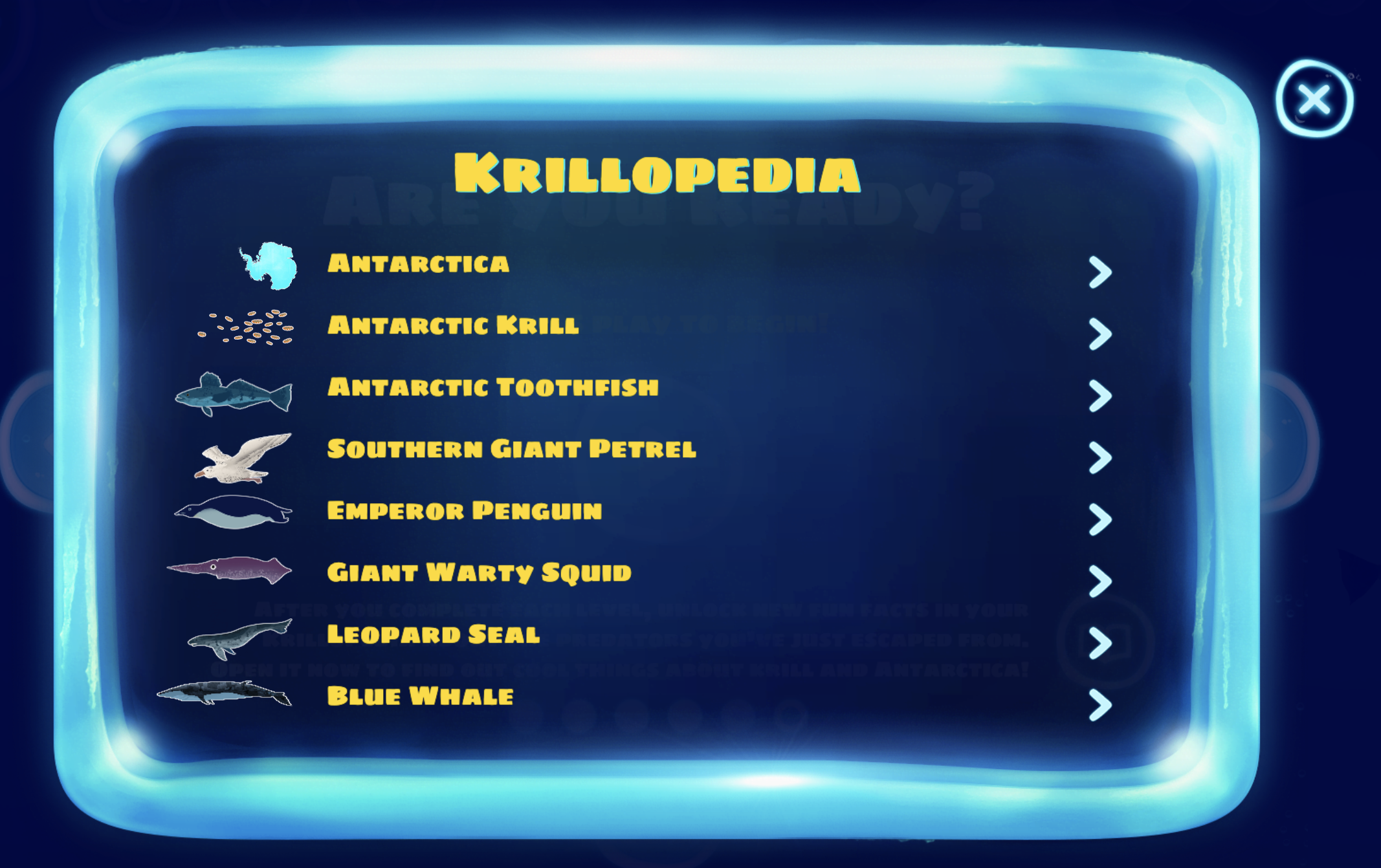
How easy it is to manage and its level of entertainment as well as difficulty, make me believe that the designers were very focused on its audience and always thought, “what would our audience like?”. I liked how the instructions were shown to the player instead of offering a “help” button, everything was given to you. I would also consider incorporating different sceneries because I think that aesthetics improves an audience’s level of commitment to a game. You don’t want to play something that is bland and always looks the same. Something that I didn’t like about the game was how the “Krillopedia” was hidden. This was an option that would come up when you would move on to a new level. It would offer you to read a about the new predators you encounter. I personally did not think I was encouraged enough to click on it, I think that kids wouldn’t either. You could easily avoid the Krillopedia, not learn about the predators and just continue to the next level. Instead of having the Krillopedia hidden, I would present the information to the kids first when moving to a new level and then save it on the Krillopedia for them to go back to.
 Critical Play Journal